
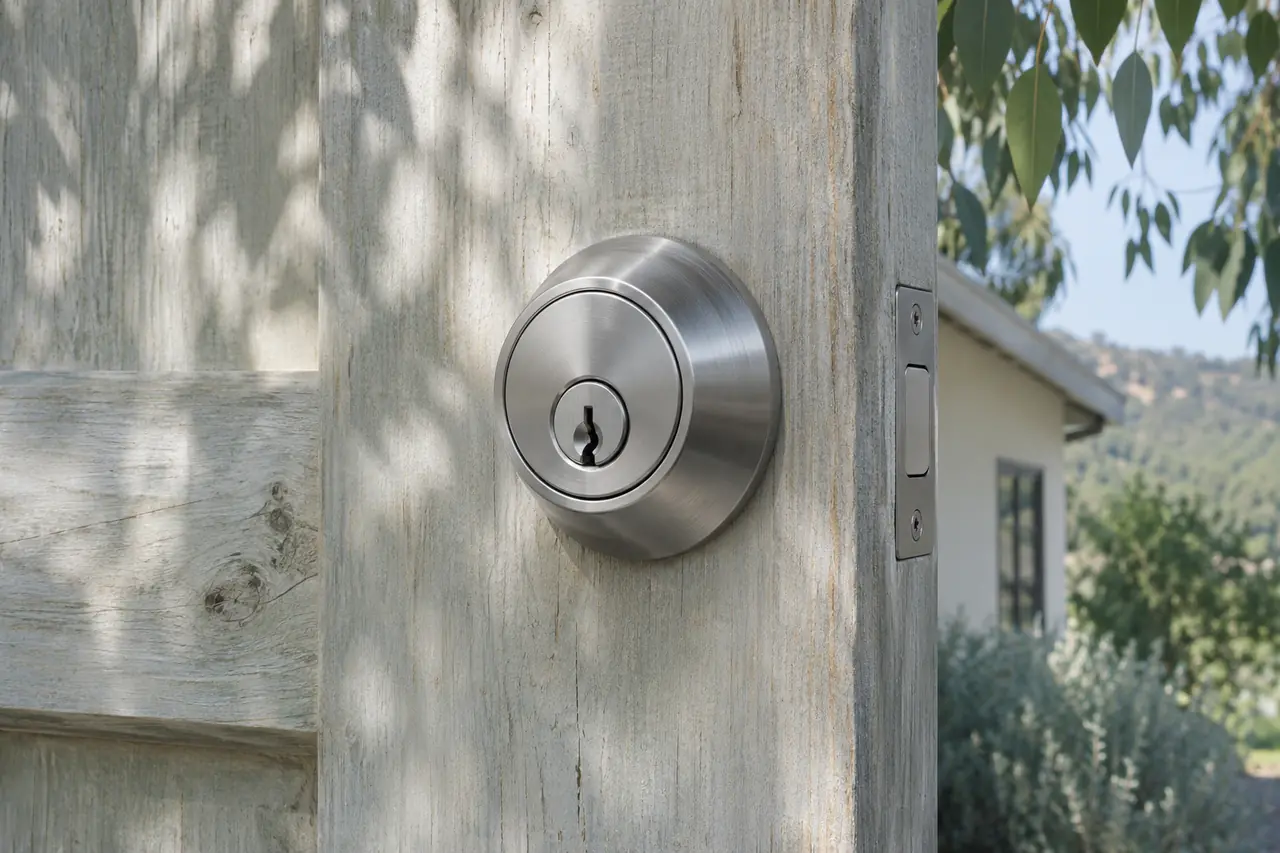
You may have learned to lift a handle or pull a door hard before turning the key. That tells us something has changed, even if you can still get inside. LockReach takes lock repair requests in Lakeside, CA, for stiff keys, unreliable latches and hardware that no longer feels right.
Describe the movement you notice
Does the key go in fully? Does it turn both ways? Does the bolt move when the door is open but catch when it is shut? Keep those observations separate. They can help distinguish a key or cylinder issue from a door that is out of line.
A loose handle and a stiff deadbolt may be two faults on the same entrance. Mention recent changes, such as new hardware or a door adjustment. Avoid forcing the key or adding unfamiliar products while the problem is being assessed.
Repair and replacement are options to compare
A worn component may be replaceable, or the existing hardware may no longer suit the door. Compare the proposed repair with any replacement before choosing. Include the locking function, how the handle feels and the people who use it.
If a replacement is suggested, ask what happens to the key arrangement. Compatible cylinders may be matched; another lock may need its own key. Electronic features can add power, setup and backup-access requirements.
Check the entrance in normal use
The repaired lock should be checked with the door in its usual position. Turning a key in an open door does not establish that the bolt meets the strike correctly when closed. Ask about any remaining door or frame work.
For a door that cannot be left secure, make that clear when discussing availability. An opening, a temporary measure and a lasting repair are different outcomes, so agree what the work is intended to achieve.
Notice whether the problem changes with the door position
A key that turns easily with the door open but catches when it is closed can point toward a fit problem as well as a lock problem. A key that struggles in either position tells a different story. Report what you have already noticed during ordinary use; do not keep forcing it to reproduce the fault.
There may also be more than one worn part. A loose handle, a reluctant cylinder and a latch that misses the frame are distinct observations. Keeping them separate helps avoid a repair that improves the key action while leaving the entrance difficult to close.
Keep the fault history useful
Mention a recent handle replacement, a slammed door, a broken key or a gradual change over time. If every key behaves the same way, say so. Leave broken pieces available and avoid adding glue or unidentified products to the keyway. The condition should be assessed before deciding between repair and replacement.
What still works?
Keep the key, the door and any controls in view as separate observations. The details help establish the work you need.
A useful question
Will a new key fix a sticking lock?
It depends on the cause. A worn blade is one possibility, while cylinder wear or door alignment can need different work.
Should I replace the lock before calling?
Identify the problem first if you can. New hardware may still struggle if the door or strike is causing the fault.