
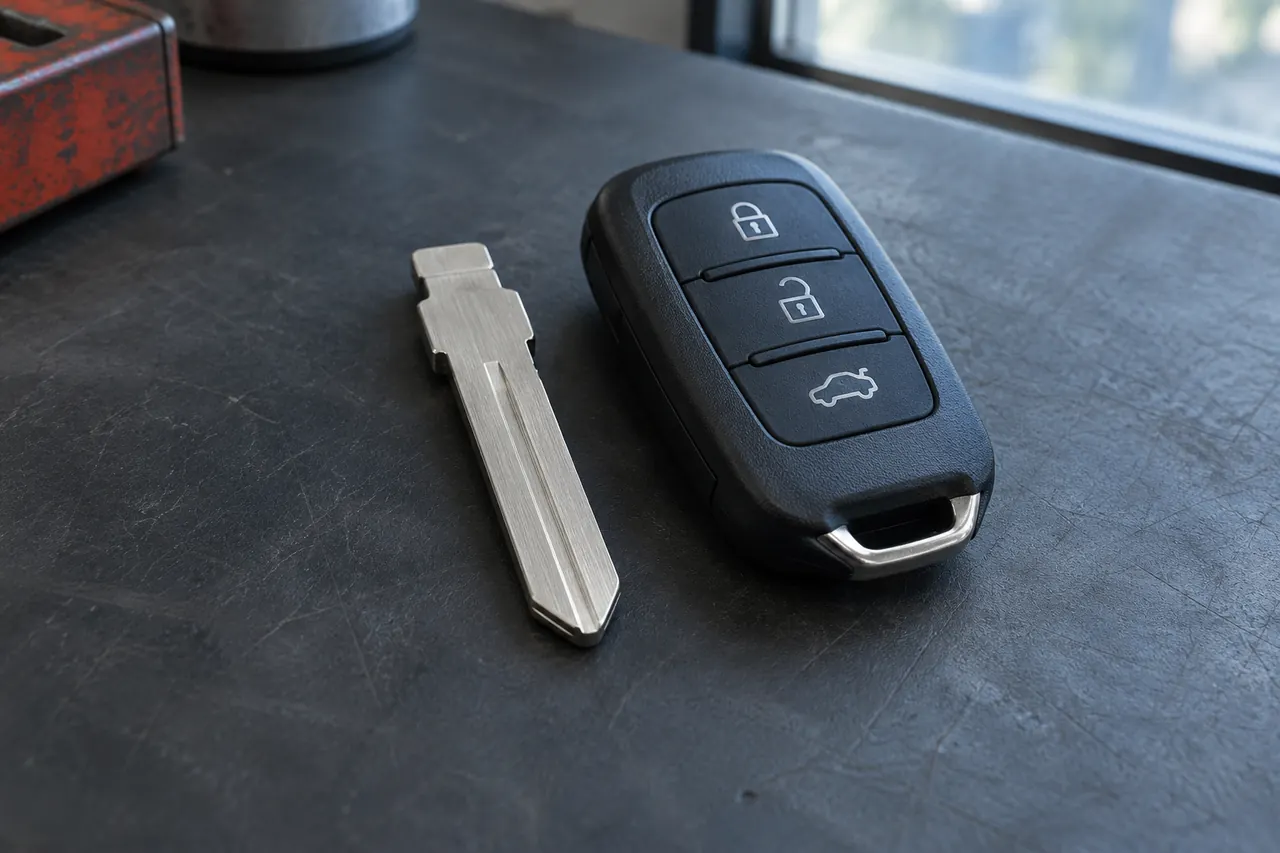
A replacement key can involve more than cutting the visible blade. Many cars also need an electronic part to be recognized before the engine will start. LockReach discusses car key replacement in Lakeside, CA, by vehicle and key type, including whether a working key remains.
A spare and an all-keys-lost job
Making another working key can be a different process from replacing the only one. Start with that distinction. Keep any remaining key, damaged fob and parts together so they can be checked. A case that has split does not establish that every component inside is faulty.
The year, make and model narrow down the possibilities. A part number or the original packaging may help with a key bought elsewhere. Similar-looking fobs can have different electronics, and a listing alone is not a compatibility check.
Customer-supplied parts need a check
If you bought a blank or transferred electronics into a new shell, explain exactly what was moved. Ask whether the particular part can be assessed, cut and used for the intended function. Acceptance of outside parts is not assumed.
A mechanical blade needs the right shape and cut. The car may also need transponder or fob programming. Agree which tasks are included rather than treating a cut blade as a promise that the engine will start.
Test the agreed functions together
Before considering a replacement finished, check the jobs that were included: door access, starting, remote buttons and any emergency blade. Model-specific features may have separate limits. Keep the new spare away from the everyday key.
For a missing-key request, include any concern about the lost key remaining usable. Changing engine recognition and changing a mechanical door lock can be separate questions. The available options depend on the vehicle.
Decide what the finished key needs to do
A basic spare, a remote key and a proximity fob can have different functions. List what you expect to use: mechanical door access, remote buttons and starting. A quote for one function should not be assumed to include every feature of the original key. Confirm compatibility for the particular vehicle before parts are ordered.
If you already bought a key online, keep the packaging and part details. A similar case or matching number of buttons is not enough to establish that it can be cut and configured for your car. Discuss the part before arranging work; support for customer-supplied parts is not automatic.
A replacement does not answer every lost-key question
Making a working replacement and changing which missing electronic keys the car accepts are separate questions. Ask what is possible for the vehicle and what the proposed work includes. The metal door lock may also remain a separate concern. Keep any remaining keys available for the agreed checks.
What still works?
Keep the key, the door and any controls in view as separate observations. The details help establish the work you need.
A useful question
Can you use a key I bought online?
It needs to be checked for the exact vehicle and requested functions. Do not assume an uncut blade, used fob or matching-looking shell will be suitable.
Can I get a replacement without the old key?
That is possible for many vehicles, but support depends on the model, key system, parts and equipment. Confirm the available route for your vehicle first.