
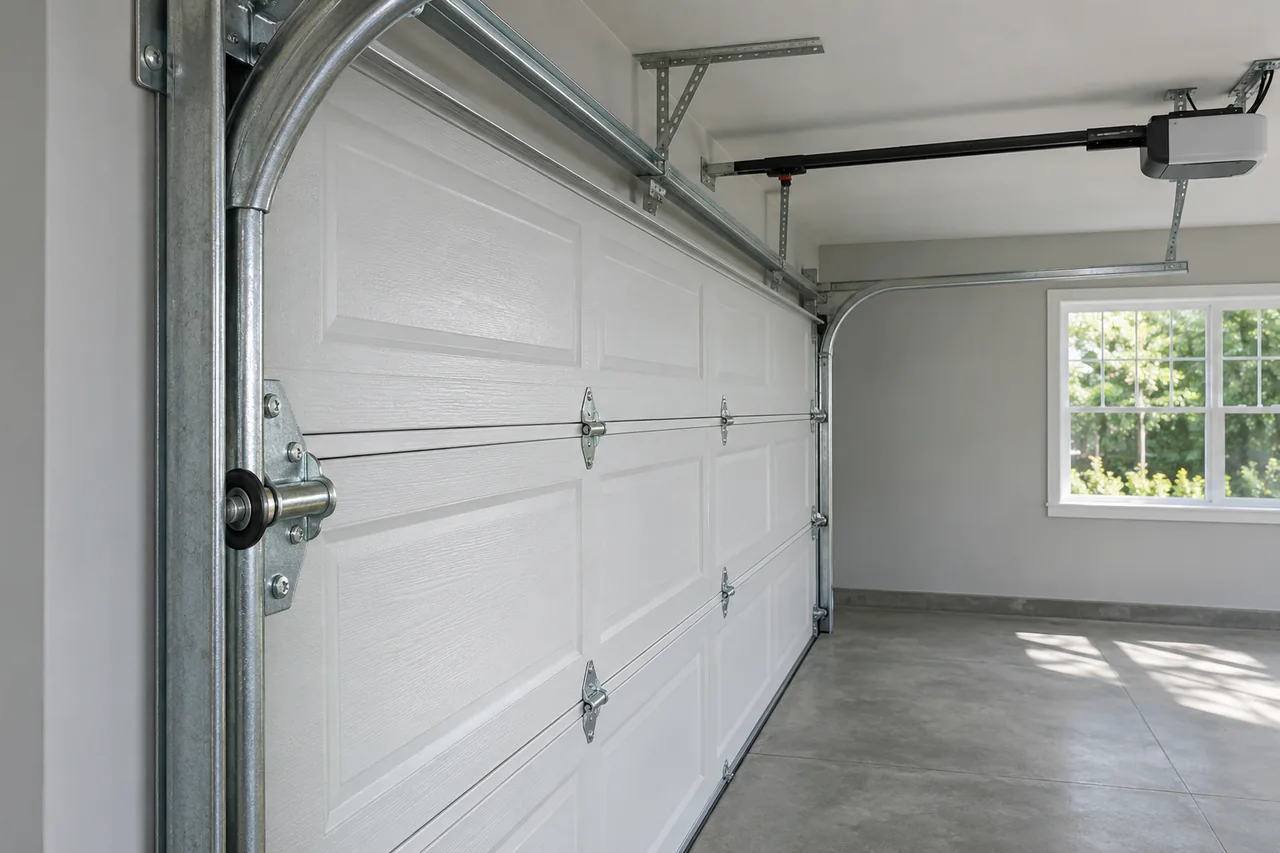
A door that stops halfway, closes and reverses, or hangs lower on one side needs a careful look. LockReach discusses garage door repair in Lakeside, CA, as a separate service from lock and key work. Describe the door's movement and the opener's response without trying to name the failed part.
The door and the opener have different jobs
The opener moves a door that relies on springs and other hardware for balance and guidance. A motor running does not prove the door hardware is sound. Mention a bang, a visible gap in a spring, a slack cable or a roller outside its track.
Stop using a visibly damaged, crooked or unsupported door. Do not loosen spring hardware, cables or bottom brackets, and keep people clear. A damaged door is not a place to try repeated cycles or force adjustments.
What changed before the fault?
A power outage, a remote change, an obstruction or an impact can be useful history. A wall control working while a remote fails is different from a door that physically jams. Describe the observations separately.
If the door reverses as it closes, keep the travel area clear and note any indicator lights without bypassing safety devices. Model-specific checks belong with the manufacturer's instructions; a symptom alone is not a diagnosis.
Understand the repair estimate
Ask which parts, labor and checks are covered. Door hardware, opener work and replacement sections may be separate items. If a part is unavailable or another problem remains, discuss that before agreeing the job is complete.
The door, opener and controls should be assessed as the agreed scope requires. If the door is your only practical way into a space, mention that early. Do not assume a lock opening or an access-code change is included in a garage repair.
The wall control and remote can tell different stories
Say whether the wall control and handheld remote produce the same result. Include a moving motor, a light, a click or no response at all, if those are observations you already have. Those details help describe the fault; they do not establish that the opener is the only part needing attention.
Do not repeatedly operate a damaged or uneven door to compare controls. A door that binds, hangs crooked or has visibly damaged lifting hardware needs assessment with people and vehicles kept clear. Do not loosen springs, cables or bottom brackets, or disconnect equipment to see whether the problem disappears.
A repair and an access change are different jobs
After moving in or losing a remote, you may want to review which controls can still operate the opener. That is separate from repairing the door's movement. Include remotes, keypad access and any physical lock in the discussion, and ask which changes and operating checks are covered by the agreed work.
What still works?
Keep the key, the door and any controls in view as separate observations. The details help establish the work you need.
A useful question
Can I use the opener with a broken spring?
Do not operate a door with a broken spring or visibly damaged lifting hardware. Keep clear and arrange an assessment by a trained door systems technician.
Does a new remote fix a door that stops?
Only if the remote is the actual problem. A door, safety-system, power or opener fault can require different work.