
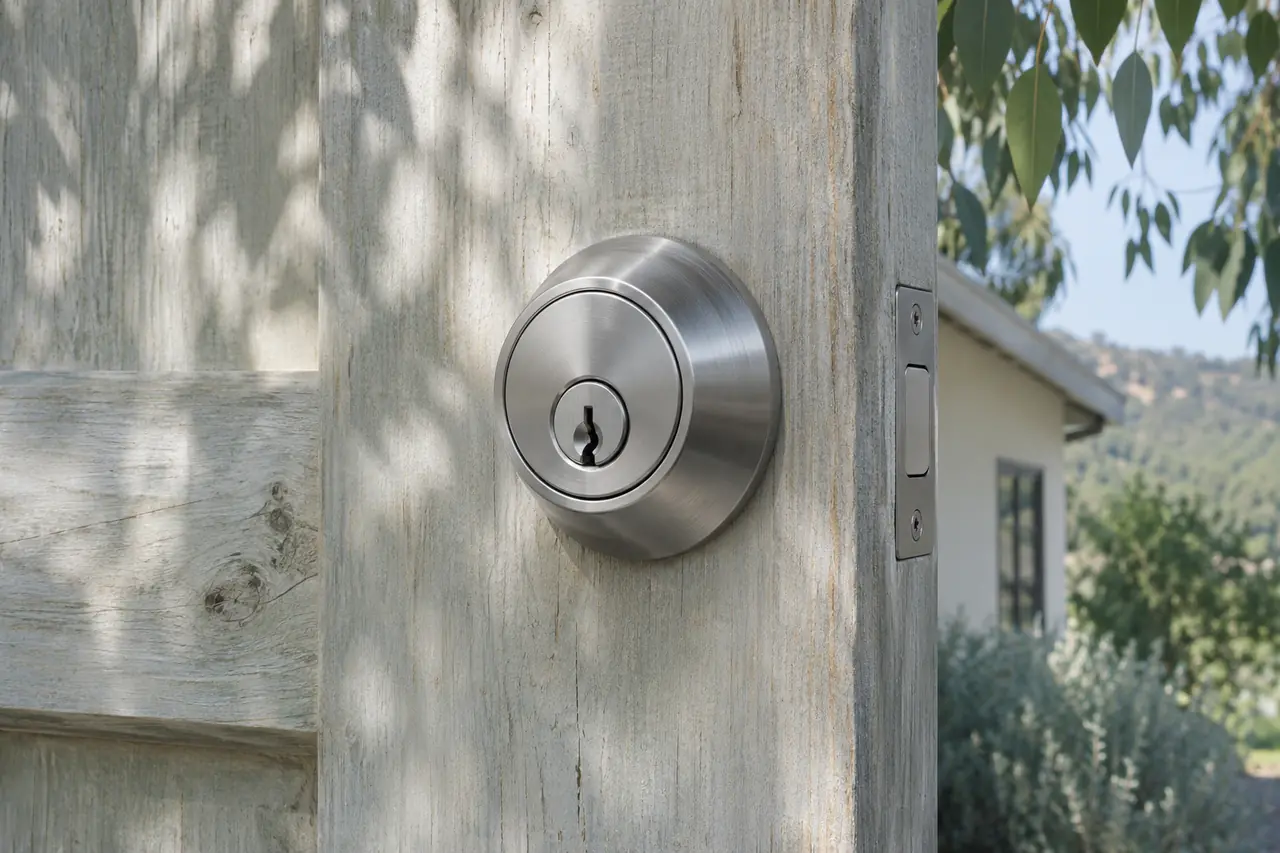
Moving day can leave you with several keys and no clear idea of what each opens. LockReach suggests a short entrance list before deciding what to change. It can help you discuss the work without buying a full set of new locks first.
Walk the entrances you control
List each keyed cylinder, including a locking handle and deadbolt on the same door. Add a side entrance or storage lock if it belongs to the property and falls under your authority. Keep shared and managed entrances separate.
Try to identify which key works where while access is available. Keep the old keys until the hardware has been assessed. A label describing the entrance is enough; avoid putting a full address on the key ring.
Add the access that has no metal key
A garage remote, keypad code and electronic credential can remain usable after the home cylinders change. Include them on the list. Ask who controls each system and which change is appropriate for it.
Some electronic locks also have a mechanical backup key. Code management and cylinder rekeying are separate questions. The specific model matters when deciding what can change and how backup access will work.
Repair the awkward entrance too
Rekeying a suitable cylinder changes key acceptance. It does not correct every door-fit or handle problem. Mention a bolt that catches, a loose handle or an entrance that needs force, so those faults stay visible alongside the access change.
Explore home locksmith work and rekeying for the different parts of the request. Check the new keys in the agreed locks afterward and keep any unchanged entrance on your list.
Turn the list into a small handover record
Once the work is agreed, keep a plain record of the affected entrances and which new key or control belongs to each one. There is no need to write security codes beside a full address. The useful part is knowing what changed and what remains under a manager's or another owner's control.
Check the spare as well as the key you carry. If one door was left outside the work, note that too. A tidy handover avoids the later assumption that every old key, code and remote stopped working at the same time.
Keep the useful details
Start with what you know. The key, the door and any controls can each tell a different part of the story.